Fast fashion is the second biggest contributor to world pollution (Greenmatch).
The production of clothing has doubled since the year 2000, whilst the average use of a garment is declining (Earth.org). The fashion industry uses more CO2 than the aviation industry (Earth.org). The industry produces 20% of the worlds waste water each year (The UN). 92 million tons of clothes are sent to landfill every year (Earth.org). Since 2000, fashion brands in Europe went from releasing just 2 new collections a year, to up to 24 new collections a year (European Parliament). Clothing utilisation went down by 36% between 2003 and 2018 (Down to Earth).
These are just some of the alarming statistics that cloud the fast fashion industry. Speaking to sustainability expert, lecturer, founder of The Fashion Debates and recently named in the “Top 50 Sustainable Fashion Influencers List”, Olivia Pinnock says “the way that we’ve been consuming fashion is actually causing really big problems in the world”.
“I totally appreciate that we all want to look good, we all enjoy fashion, we enjoy expressing ourselves and looking good and there’s nothing wrong with that at all.”
“But I think the problem nowadays is not how cheap fashion has become but it’s also how accessible it is to us.”
“The more you immerse yourself, if you start to follow influencers who are focussed on sustainable fashion. Sadly, maybe it does mean buying less and saving up for something that is a bit more expensive. I think that’s what we all have to do.”
So, how can we immerse ourselves?
- Shop second-hand and vintage:
Exploring the vintage clothing market may seem daunting at first and you may not know where to start, but once fully immersed it can be exciting and save you money.
An easy way to begin finding vintage clothing is by downloading the apps Depop and Vinted. Both these apps are free to download and easy to use. Whether you know what you want to buy or just want to browse what’s on offer, these apps both offer affordable and fashionable pieces, to designer gems and one-off pieces. Perhaps try uploading your own old garments and making some money back, instead of throwing them away.
Another way of getting involved with vintage fashion, is perhaps attending a vintage kilo sale. These kilo sales travel around the country, so keep an eye out for one in your city. Rushan, aged 24 attended the Coventry kilo sale this weekend and said “it’s good that we’re not putting these things to waste, there could be something valuable here.” Attendee Zoe, 19, emphasised how you can find more unique and one-off pieces shopping vintage, “the chance that you’ll catch somebody else walking round in this is so small”.
Also try exploring your local town or city for vintage clothing shops as well as charity shops, Birmingham for example has multiple vintage shops, such as COW in Digbeth, which offers both vintage clothes as well as reworked garments, which are all one-off unique pieces.
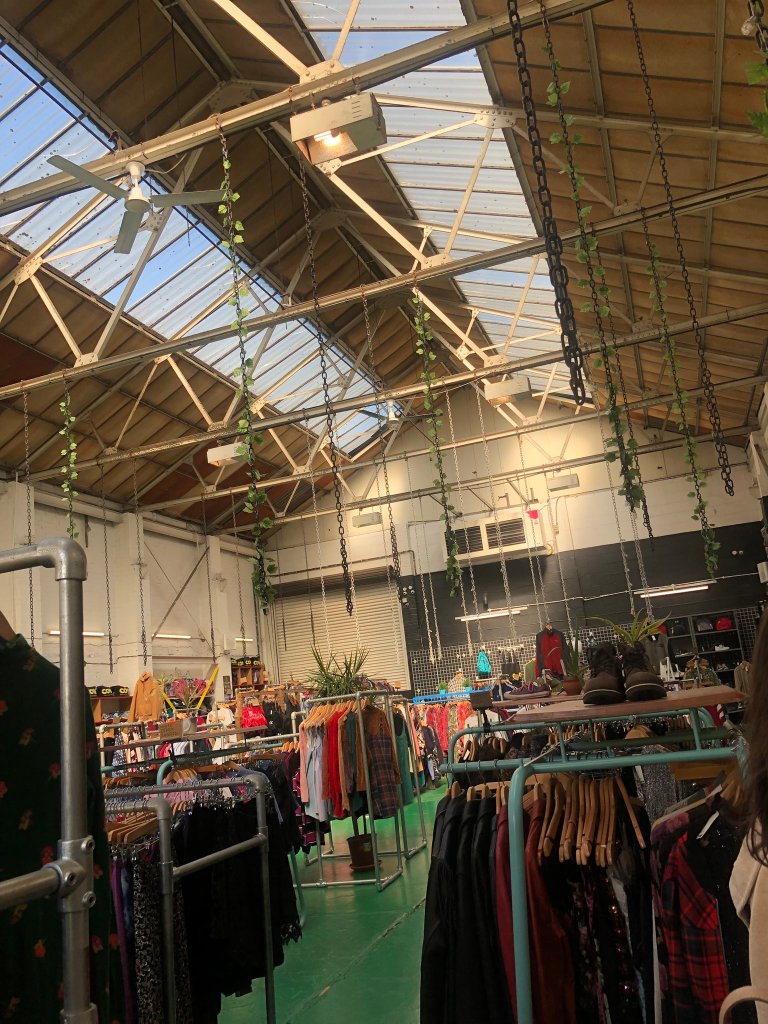
A growing popular way to shop second hand for an extremely affordable price, is exploring car boot sales. Look out for local ones visiting your town or city and you could find some hidden gems like this:
2. Another great way to stop over-consuming fashion is to use online clothing rentals:
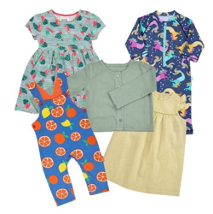
There are more and more initiatives like this popping up currently, and a great one is Graceful Changes. Straying away from fast fashion when shopping for children’s clothing can be very difficult, especially as children grow so fast and need new clothes often. Graceful Changes offers a solution for this issue, parents can rent clothes for their children and babies, instead of buying, then exchange the items as and when parents need to. Speaking to the founder of Graceful Changes, Josefa Buckland, she explained her brand’s ethos, “kind of at the heart is sustainability and the circular economy and I suppose it’s making in high quality ethical clothes as easy as possible for parents.”
“So, subscribers will save about 75% of the cost of if they were buying new which is a lot. The brands that I stock are high quality, ethically made and not as cheap as Primark and other high street. So that’s kind of the difference, you’re obviously getting a much higher quality product”.
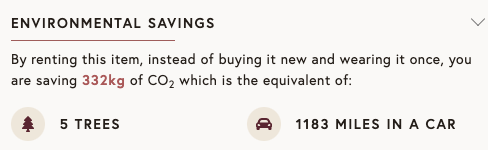
For a one-off piece, perhaps for a big occasion where you’d only wear a statement piece once, Hurr Collective is a great option. Their site offers many options of designer statement pieces, available to rent for a fraction of the retail price. Each item on their website includes important statistics on how renting the item is better than buying it new and wearing it once.
- Try swapping old clothes:
If you’re finding that you no longer wear clothes in your wardrobe, instead of throwing them away try swapping. Whether this is through a swap service or with your friends, it means less is going to waste.
Big Sister Swap a personalised swapping service where you select what you’d prefer to receive back, send them your unwanted clothes and receive a package of clothes previously sent in by others.
Olivia Pinnock also suggested creating a WhatsApp group chat with your friends, where when you no longer want an item of clothing in your wardrobe, ask if any of your friends would like to swap.
4. Sustainable brands:
Although shopping from strictly sustainable and ethical brands can be expensive, a lot more pricey than fast fashion, for your wardrobe basics they can be great. Investing in an essential wardrobe basic can be very beneficial and will most likely last you much longer than cheaper high street options, saving you money in the long term.
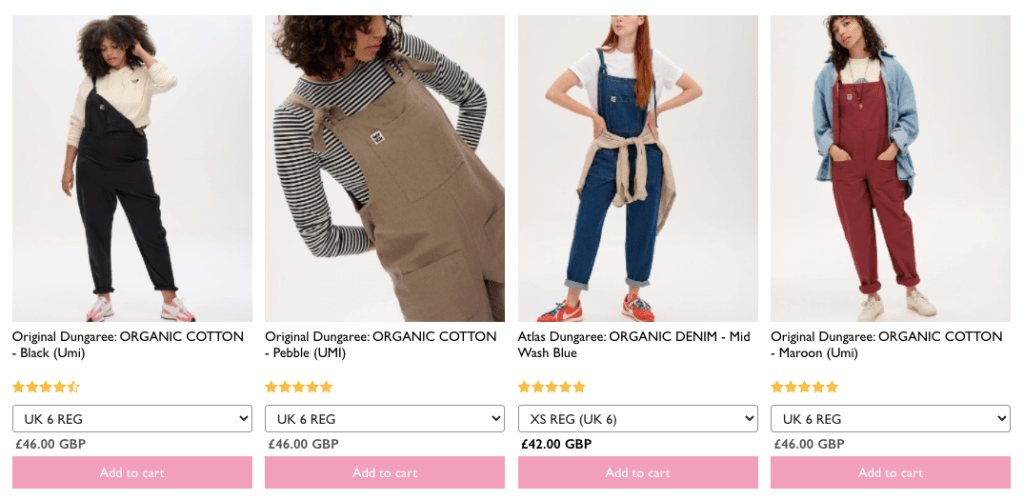
Lucy and Yak is an entirely sustainable and ethical fashion brand, featuring a majority of items made purely from organic cotton. This brand offers both basic essentials whilst also offering some unique pieces, such as their iconic dungarees, arguably their most popular garment.
5. Don’t feel guilty for shopping from fast fashion!
There is a reason that fast fashion still exists, regardless of all the harm it causes. It’s accessible, affordable and fashionable and consumers shouldn’t be shamed for using these brands. However, we can still shop from these brands but perhaps still change our habits.
Try to only buy garments from fast fashion brands that you know you will wear more than once, a garment that you feel will last you for a long time. Try not to be influenced by micro-trends and short-term fads, that won’t still be trendy in a few months. If you have a little more time to spend browsing in the shops or online, look at fabric quantities. Try to steer clear from garments that have high quantities of polyester and go for garments that use organic cotton. Lots of brands are now starting to use recycled cotton in their garments, for example H&M, so look out for their green labels.
It’s important that we all start to question our choices in fashion, whether you make big or small changes, the change will be for the better.
 Preedy Posts